How to Define antisemitism?
Combating Antisemitism: Why a Definition is Needed.
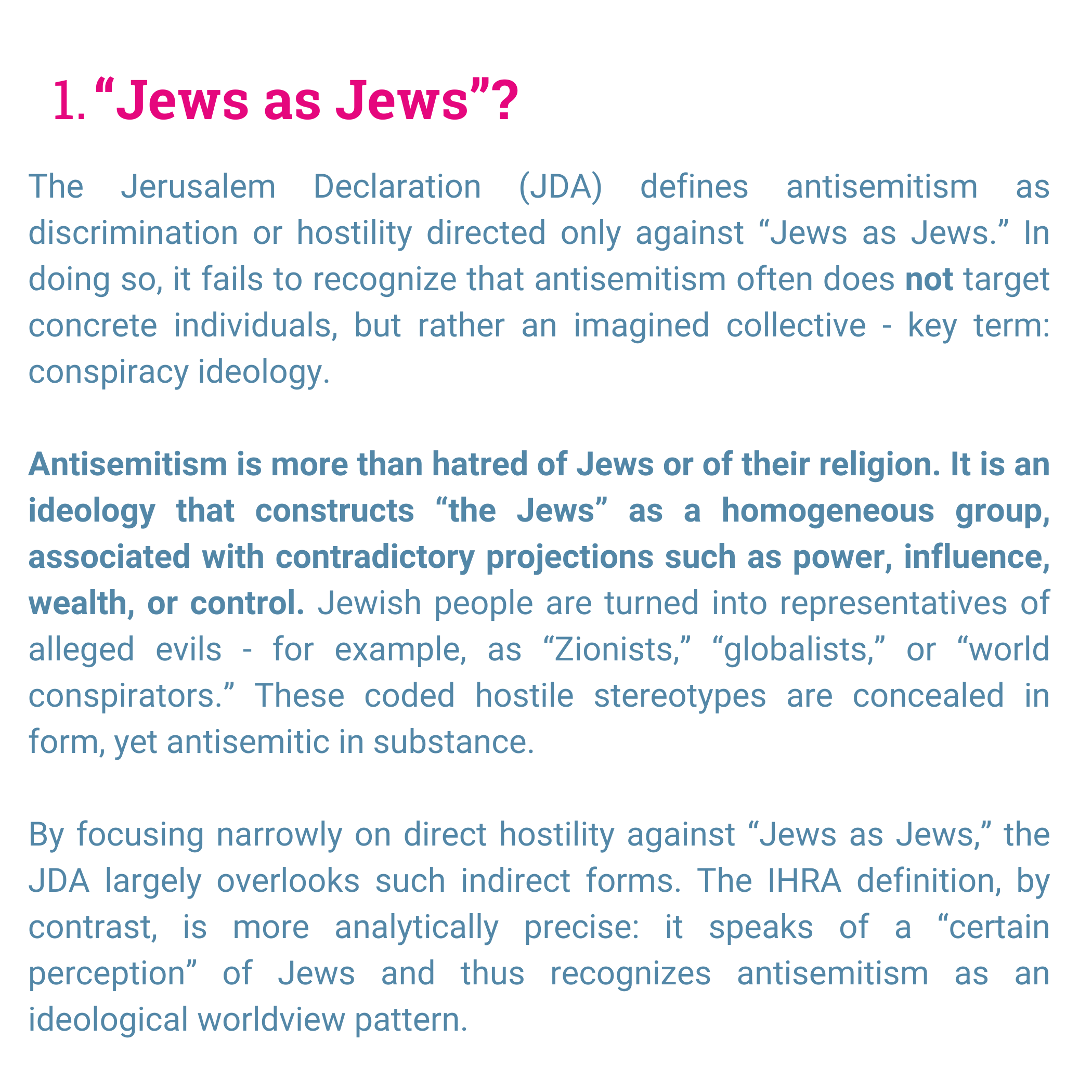
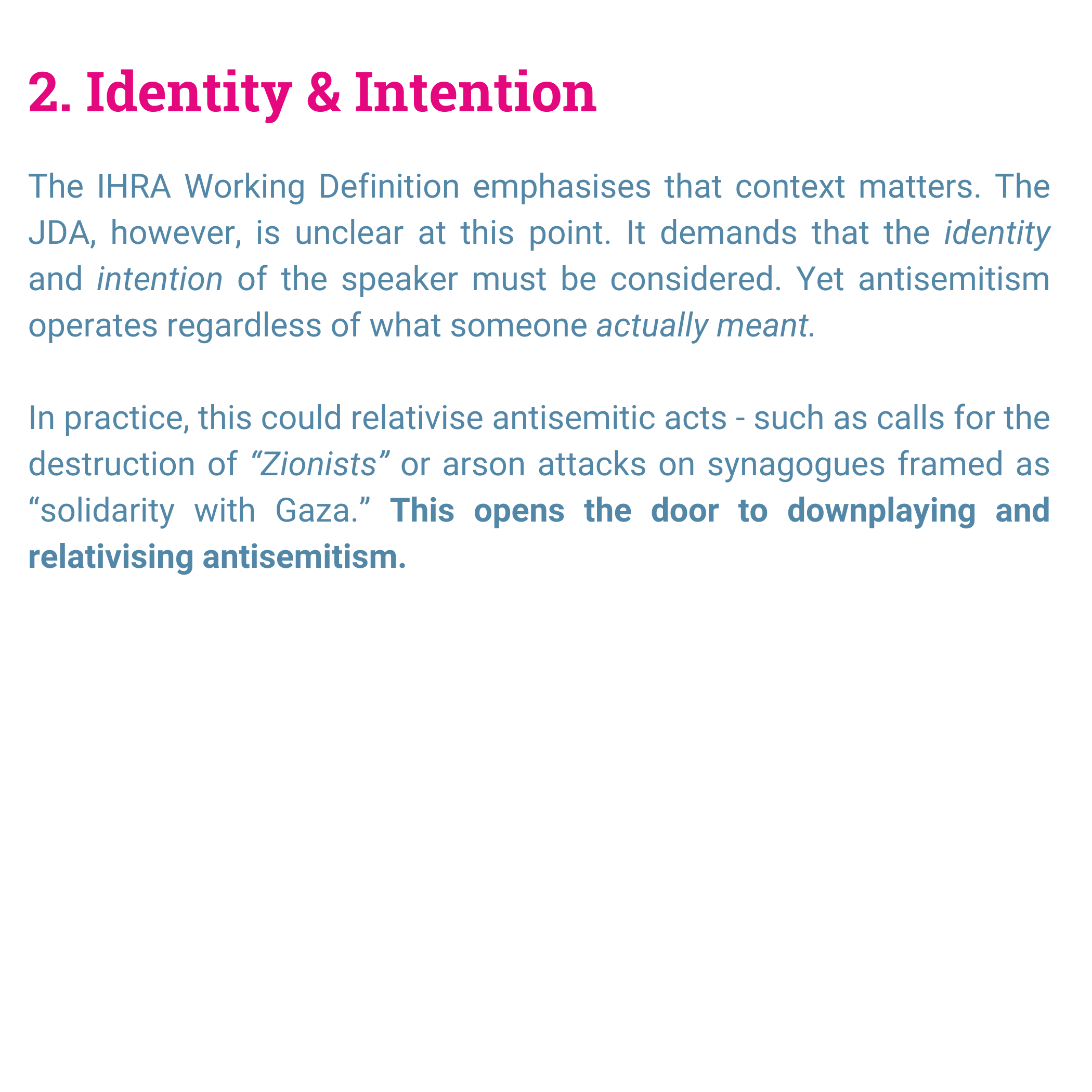
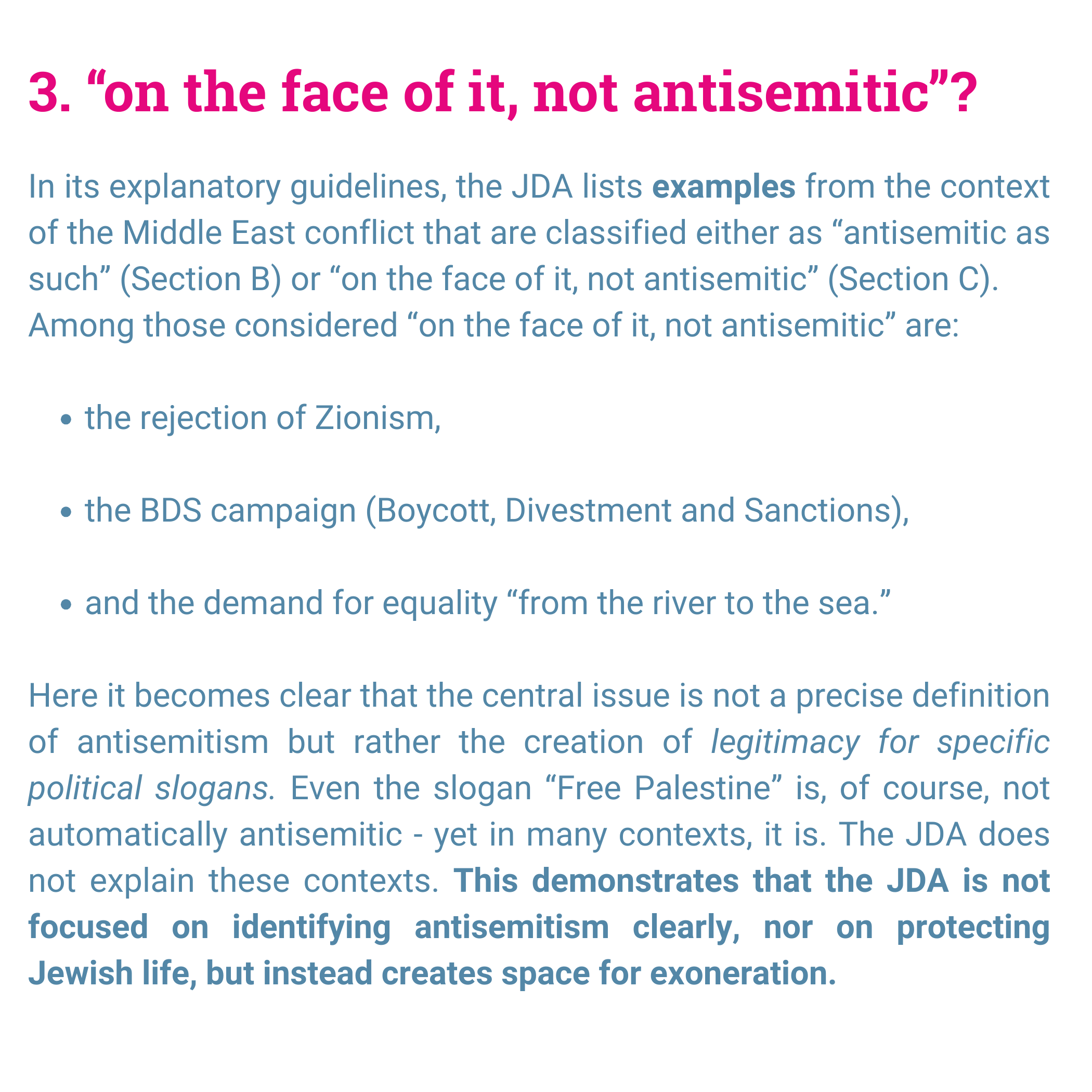
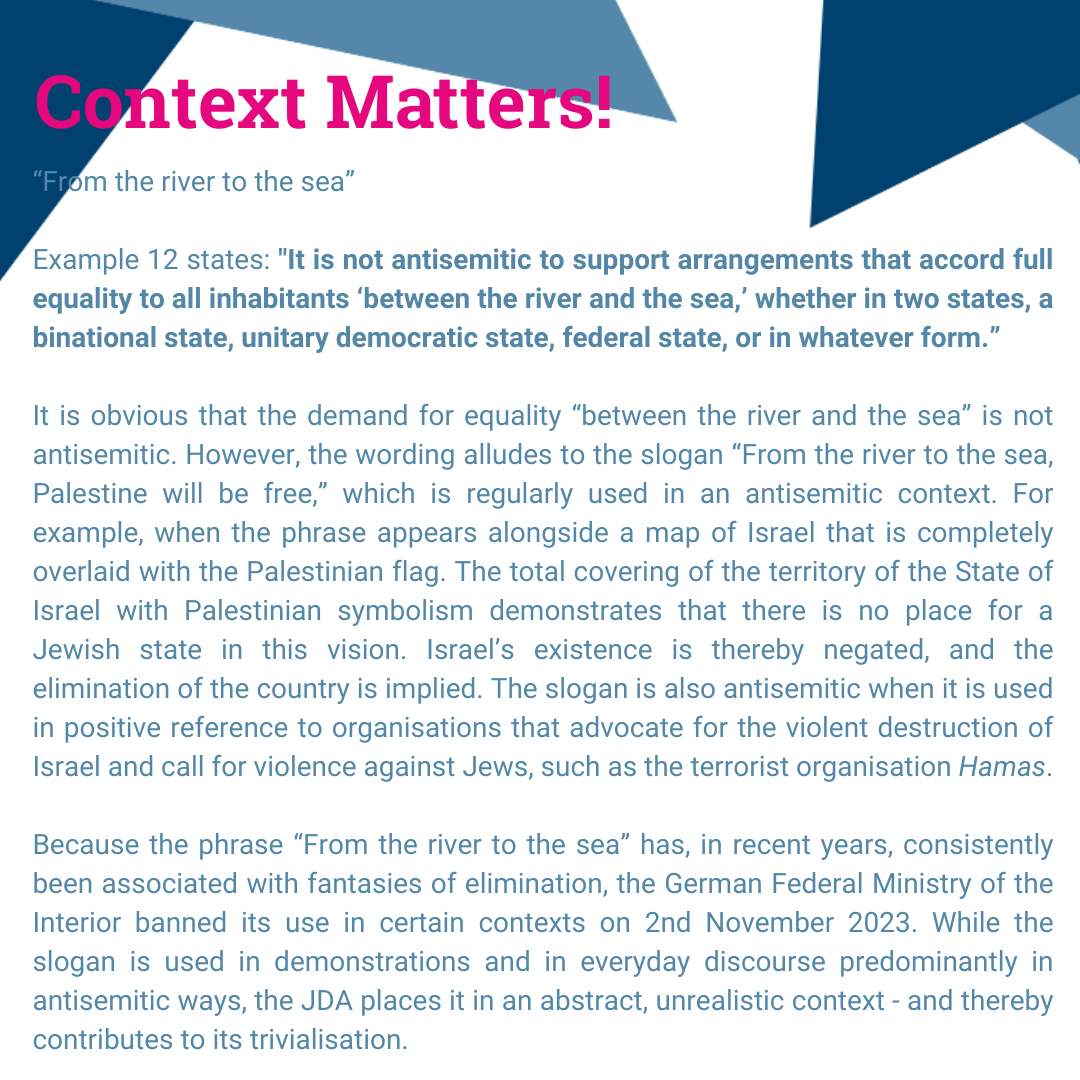
The JDA Uncer Close Scrutiny - Three Main Problems
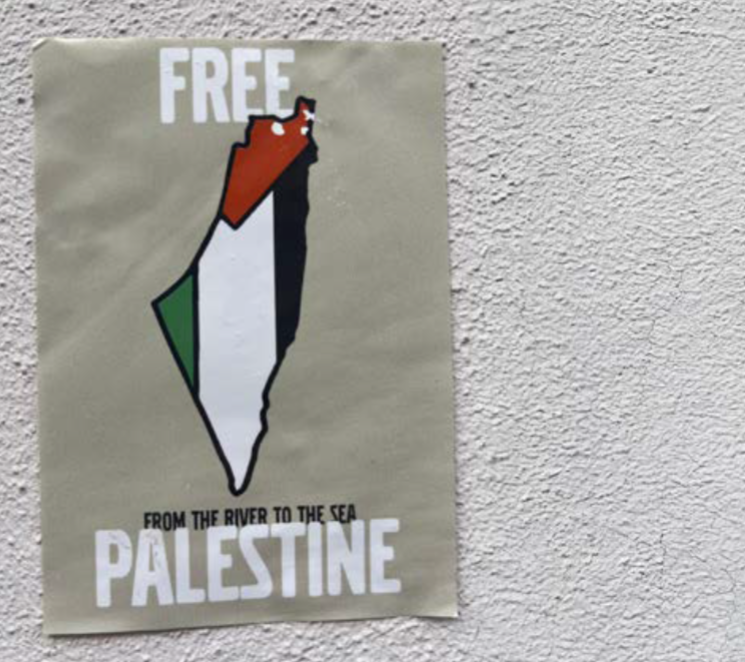
The BDS Campaign and the Jerusalem Declaration
Example 14 grants the BDS campaign - which, since 2005, has advocated for boycotts of Israel, for divestment, and for sanctions against the Jewish state - a form of carte blanche. The JDA states: “Boycott, divestment and sanctions are commonplace, non-violent forms of political protest against states. In the Israeli case they are not, in and of themselves, antisemitic.” It is therefore unsurprising that the BDS movement welcomed the JDA.
However: this movement is not a neutral protest campaign. It was founded by a coalition that includes organisations such as Hamas - an Islamist terrorist organisation whose founding charter calls for the destruction of Israel and glorifies violence against Jews. A central coordinating body remains the Palestinian BDS National Committee. Members of this committee include, among others, the Popular Front for the Liberation of Palestine (PFLP), Hamas, and the terrorist organisation Islamic Jihad.
In many BDS-related texts, events, and campaigns, Israel is delegitimised, double standards are applied, and antisemitic narratives are reproduced. The objective is frequently not political reform or peace, but the complete dissolution of Israel as a Jewish state - a demand that is not directed against a particular government, but against the existence of the world’s only Jewish polity. The JDA ignores the fact that the fight against Jewish statehood itself constitutes an act of hostility - and is a central element of contemporary antisemitism.


Consequences of an Unclear Definition