Antisemitism
Antisemitism
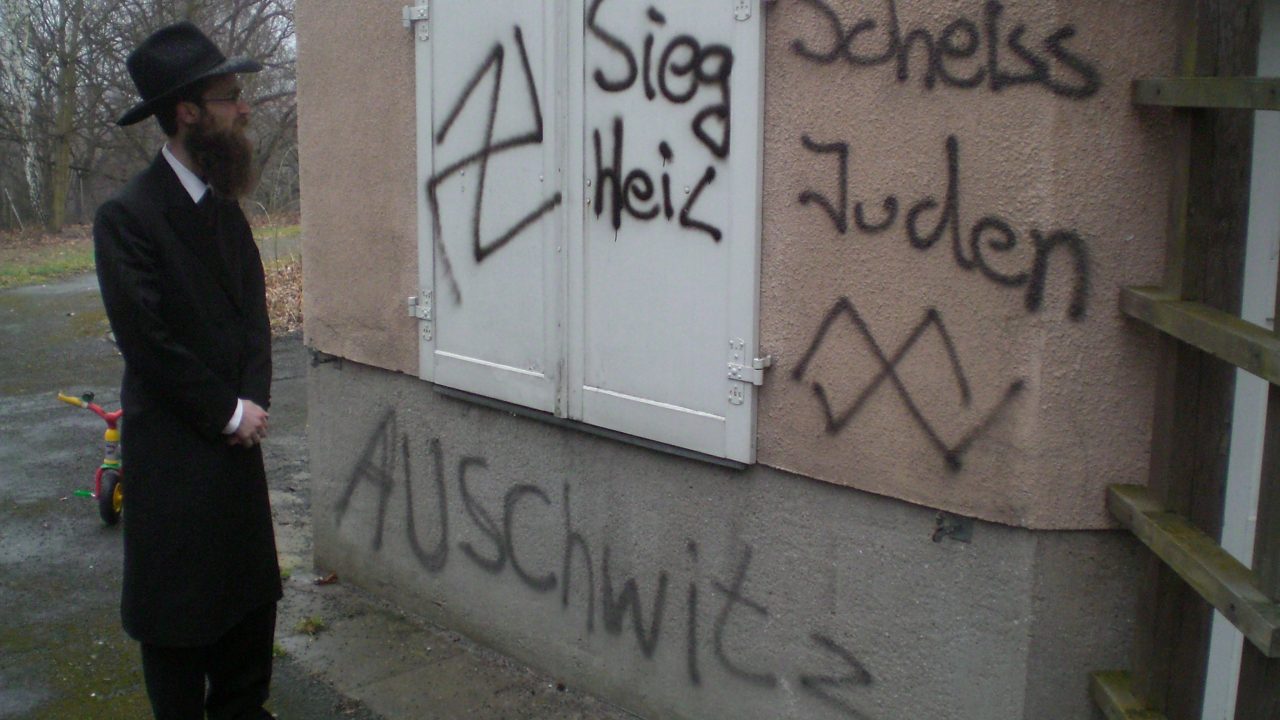
Jews have long been scapegoated for the world’s problems. Even today, antisemitism persists at all levels of society and education, spanning the entire political spectrum. People continue to draw from a deep reservoir of antisemitic clichés, ranging from conspiracy theories about Jewish world domination or antisemitism disguised as supposed criticism of Israel, to attacks on capitalism, criticism of the ‘the system’ or calls to end Germany’s so-called ‘cult of guilt’.
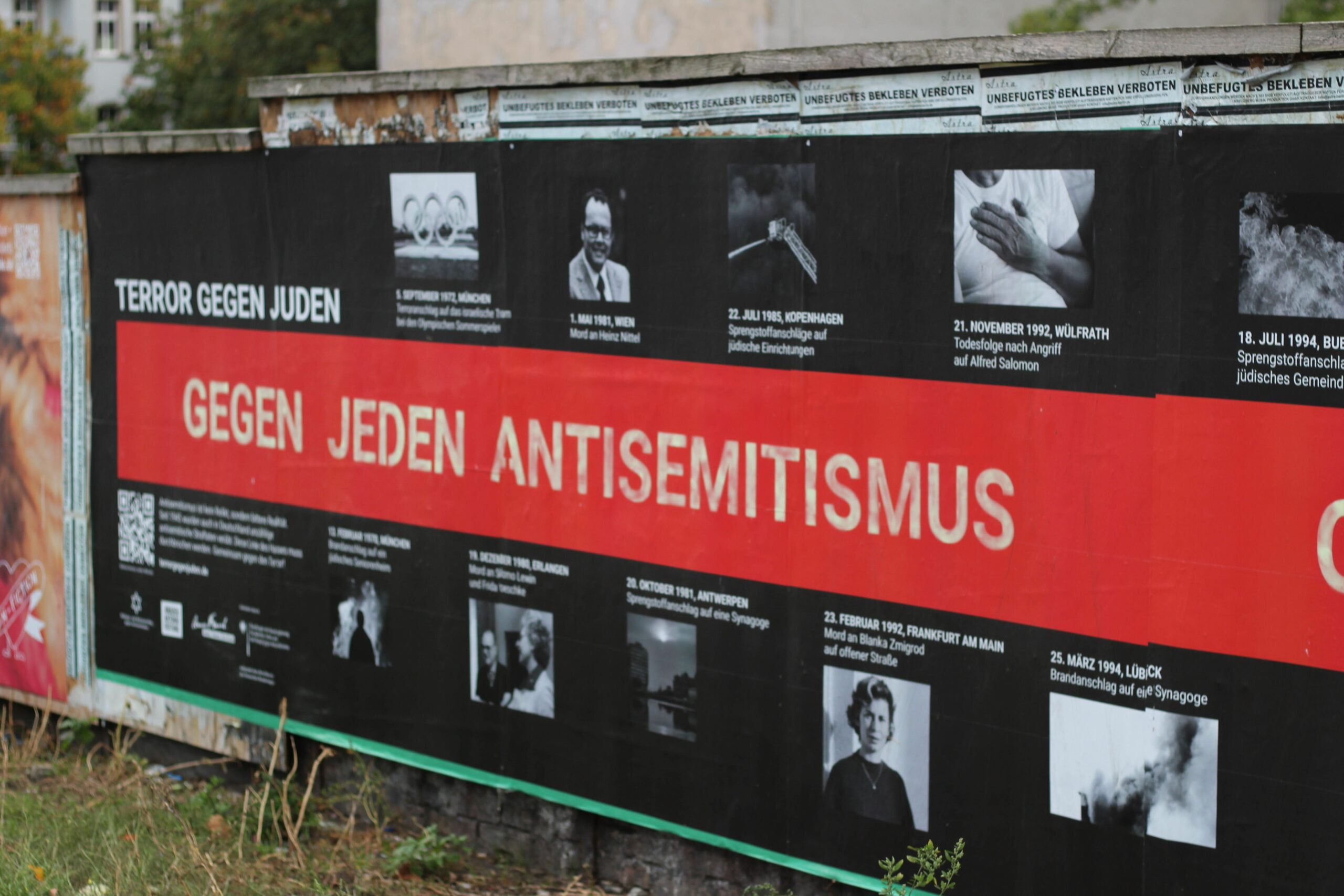
Our Foundation regularly provides overviews that track how and where antisemitism manifests today. An online timeline documents antisemitic attacks in Germany. With the annual “Education and Engagement Weeks against Antisemitism,” the Foundation created the nation’s largest campaign addressing this issue. Across the country, local events, traveling exhibitions, and projects shed light on antisemitism, foster networking, and inspire resistance. For example, young people research the histories of local residents who were forced into exile or murdered during the Holocaust.
This work is crucial, particularly in regions like former East Germany, where there is often little awareness of how Jewish neighbors were marginalized, persecuted, and ultimately murdered. The Education and Engagement Weeks against Antisemitism connect the dots between historical and contemporary forms of antisemitism.

Shalom!
We are the Education and Engagement Weeks against Antisemitism.
Every year we organize events across germany - over the course of more than 20 years, we have organized 2,500 lectures, concerts, and exhibitions together with 800 organizations! This makes the Education and Engagement Weeks the largest civil society alliance against antisemitism. We connect initiatives with Jewish communities and nationwide organizations to raise awareness. We are also a joint project of the Amadeu Antonio Foundation and the Anne Frank Zentrum.
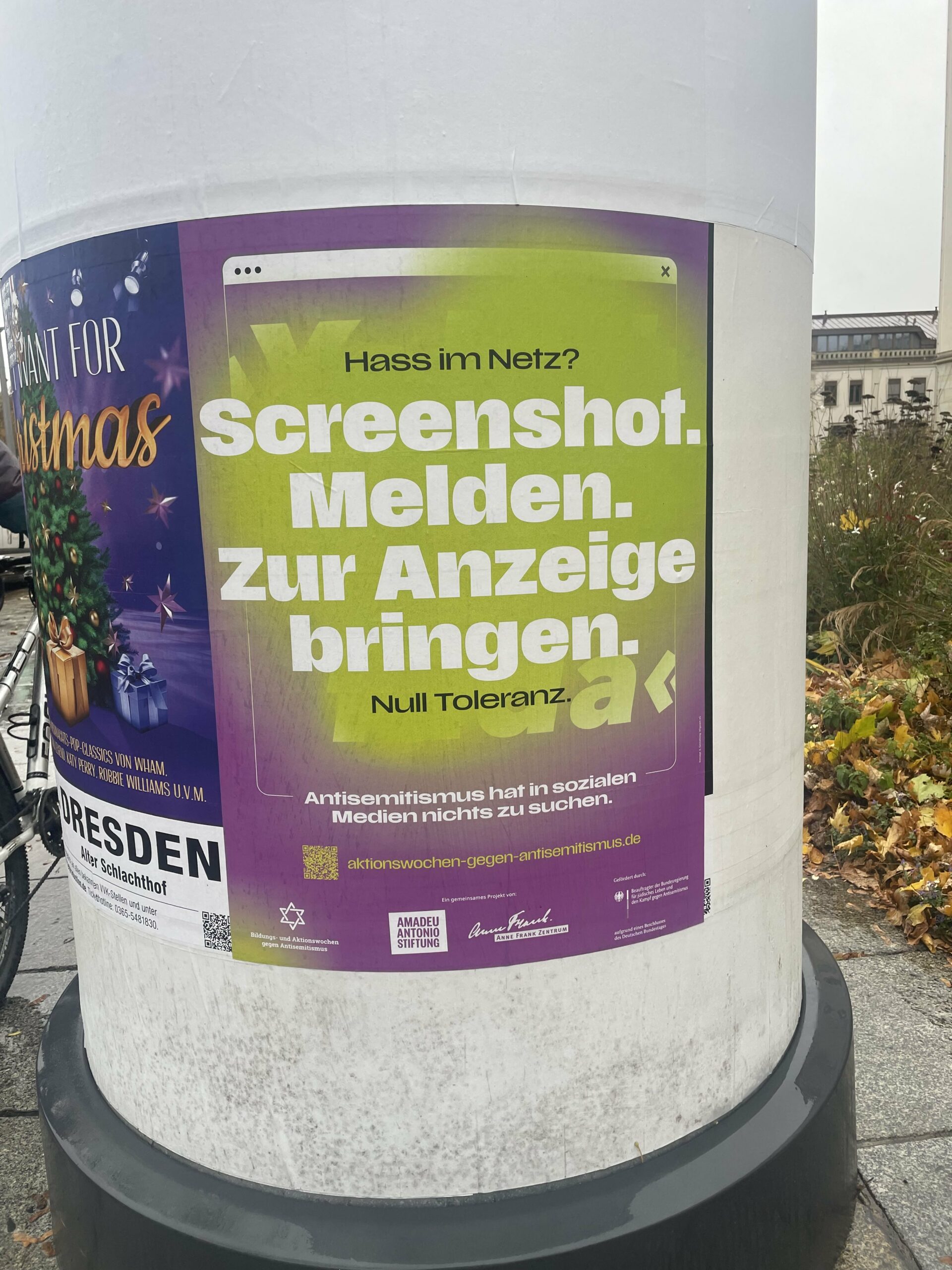
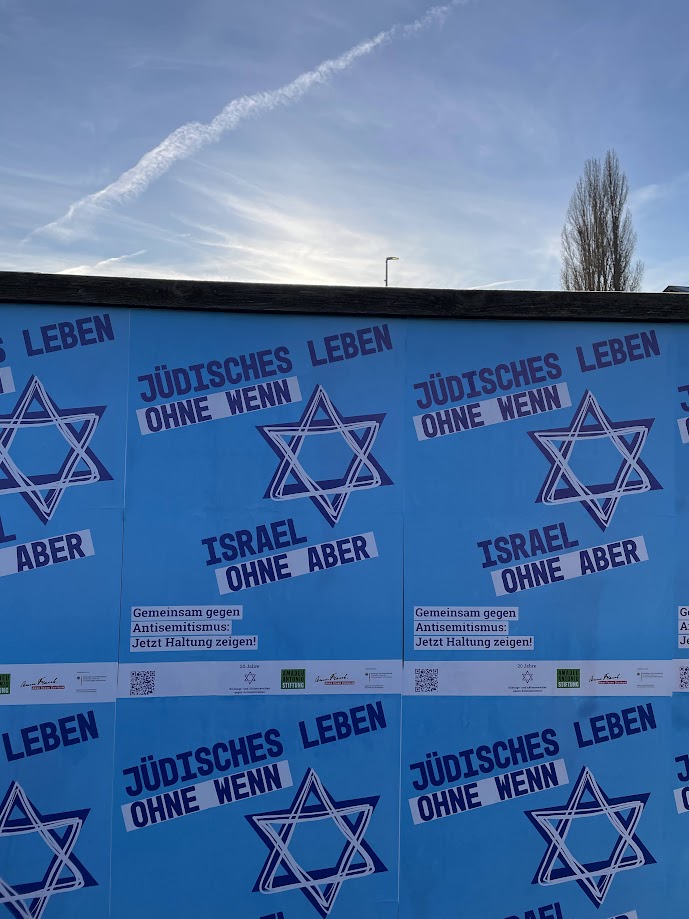
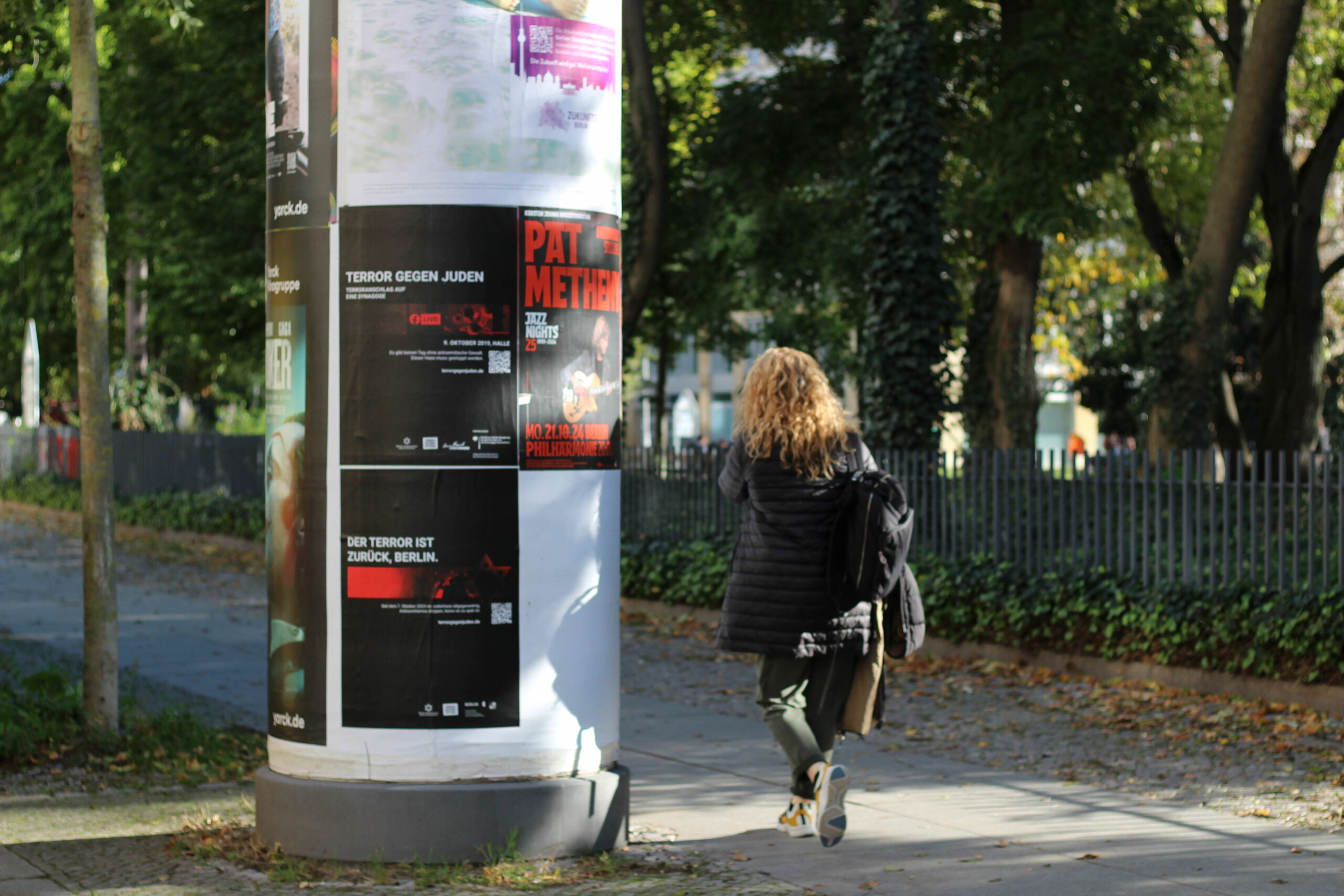
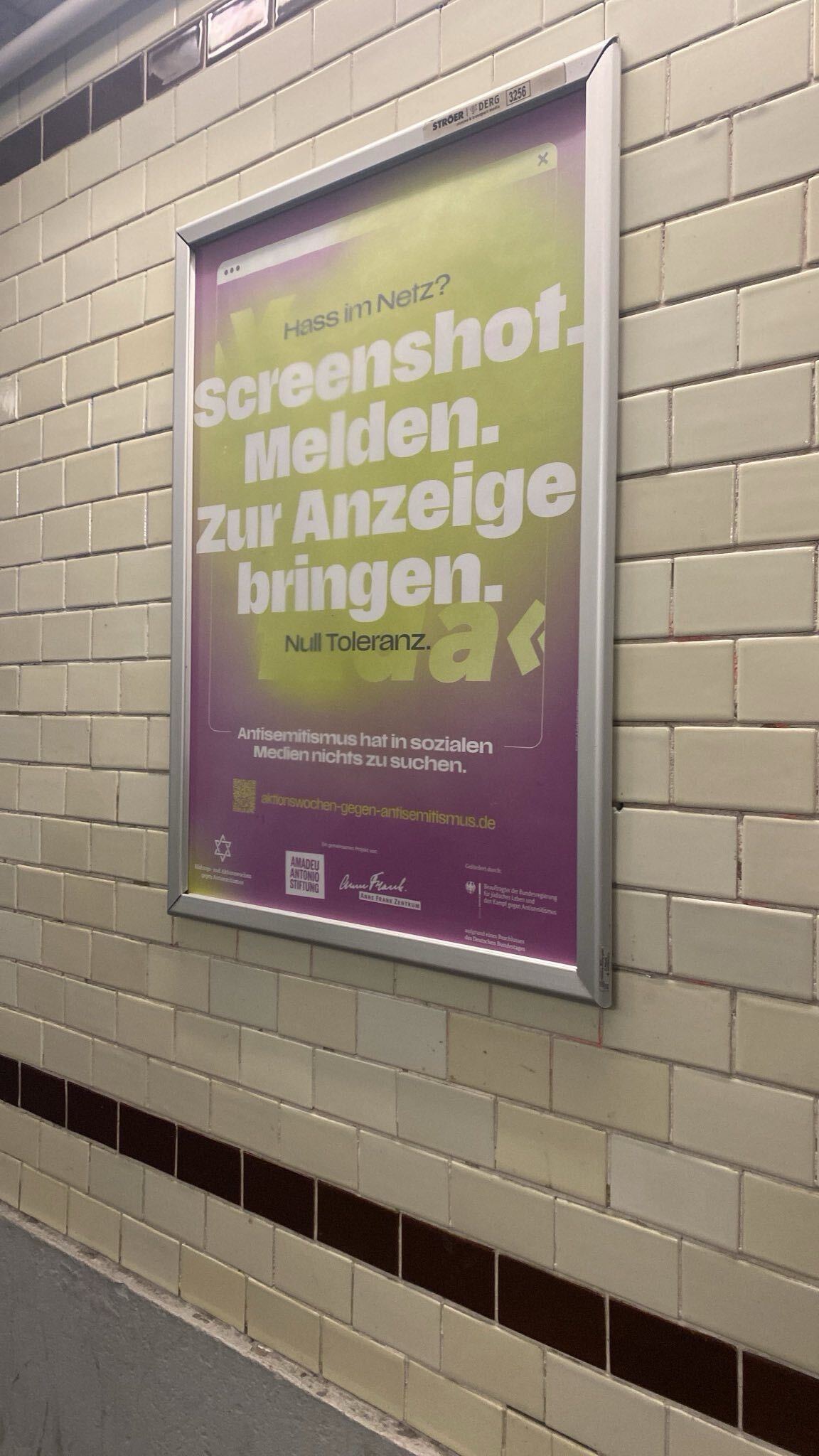
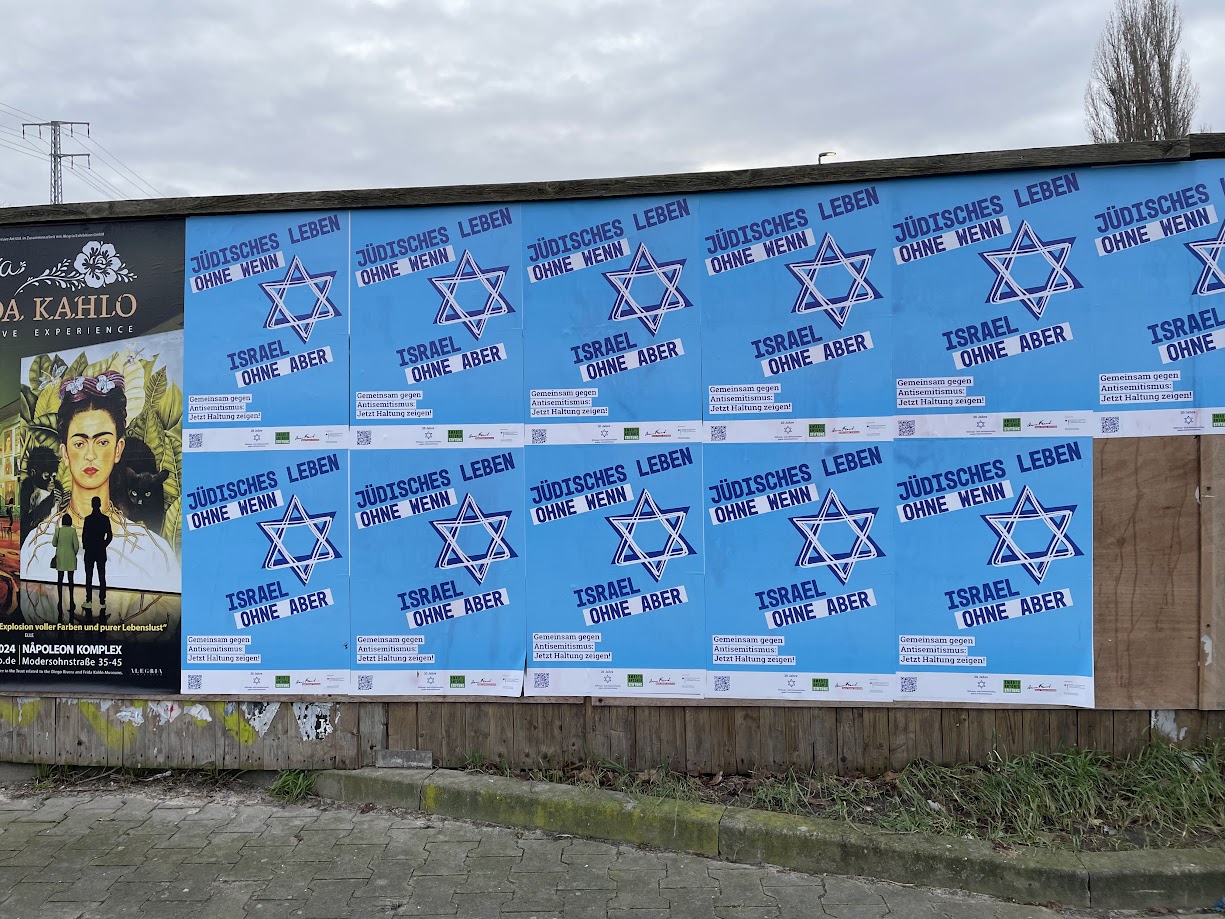
But thats not all! Every year, we additionally intervene against antisemitism with a nationwide campaign: in 2025, our posters could be seen at 1,200 locations in 36 cities, and our trailer was shown in dozens of cinemas across germany. Our flyers, brochures, and situation reports show how antisemitism manifests itself and how Jewish people are threatened in everyday life. They can all be dowloaded here. We are also very active on all digitial formats!
Do you want to know what we're up to in 2026? We invite civil society initiatives to join us and take part in the Education and Engagement Weeks with their own events. Our theme for 2026: We want to fight the rampant antisemitism at Universities! We will have a focus on cooperations with university events as well as student initiatives that take a critical approach to antisemitism.
The 23rd annual Education and Engagement Weeks against Antisemitism will take place from October 6th to November 9th 2026.
The Whether you are an individual actor, an initiative, or an organization, you are warmly invited to attend events all over germany. You can find an overview of all events featuring our partners and democratic civil society initiatives in our event calendar.
Get together, get connected!
We also have several events in both english and hebrew every year!
Jewish Student Experiences in Germany - Excerpt from the ADL-WJUS Global Survey
This report provides an exclusive Germany-focused reading of the ADL-WUJS Global Survey of Jewish University Student Experiences. The analysis centers on the 205 respondents who reported attending university in Germany and places their responses in comparative context with Europe and the worldwide survey sample where relevant.
The German data point to a campus climate in which Jewish students regularly manage risk through self-censorship. While ADL's global findings already show that identity concealment is widespread among Jewish students worldwide, Germany appears even more acute: 85% of surveyed German respondents reported hiding their Jewish identity at least once, and 89% reported hiding their Zionist identity at least once over the previous 12 months.
What else do we do?
Beyond the Education and Engagements Weeks, we also use a wide range of tools and concepts for educational outreach and provide suitable formats to help counter antisemitic resentment. We work on professional trainings, practical guides, events, and multimedia publications. A large number of further education opportunities, such as workshops, are offered by our cooperation partner, the Anne Frank Zentrum.
We create online and offline spaces and initiate discussions - for example, our tool "Nichts gegen Juden" (Nothing against Jews), helps people take a clear stand against common antisemitic slogans and arguments. In this way, we foster alliances so that people can support one another in the fight against antisemitism. We also maintain a chronicle of antisemitic incidents, through which we monitor and publicly document antisemitism in Germany.
In doing so, we make Jewish life in Germany visible - which, despite everything, still exists and continues to thrive. We strengthen Jewish perspectives, and they are an integral part of our analyses. At the same time, we try to build networks and bridges to reach wider society. In addition, each year we publish at least one civil society situation report, in which we highlight current key observations and developments on antisemitism in Germany.
But we cannot do all of this alone. Hatred of Jews must be fought collectively and sustainably. So: we are glad you are here, learning more, and interested in becoming an ally!
Our Annual Nationwide Campaign

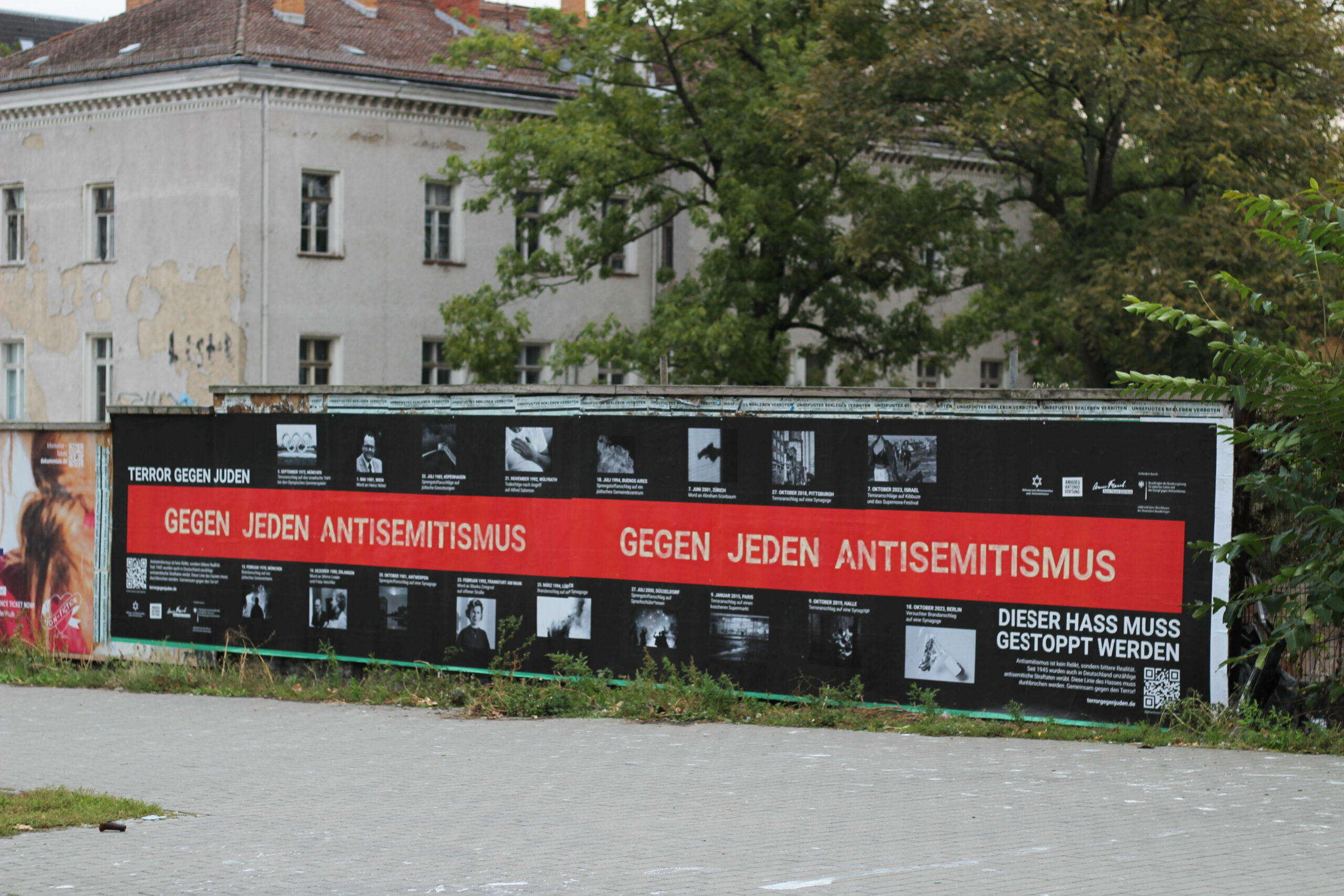
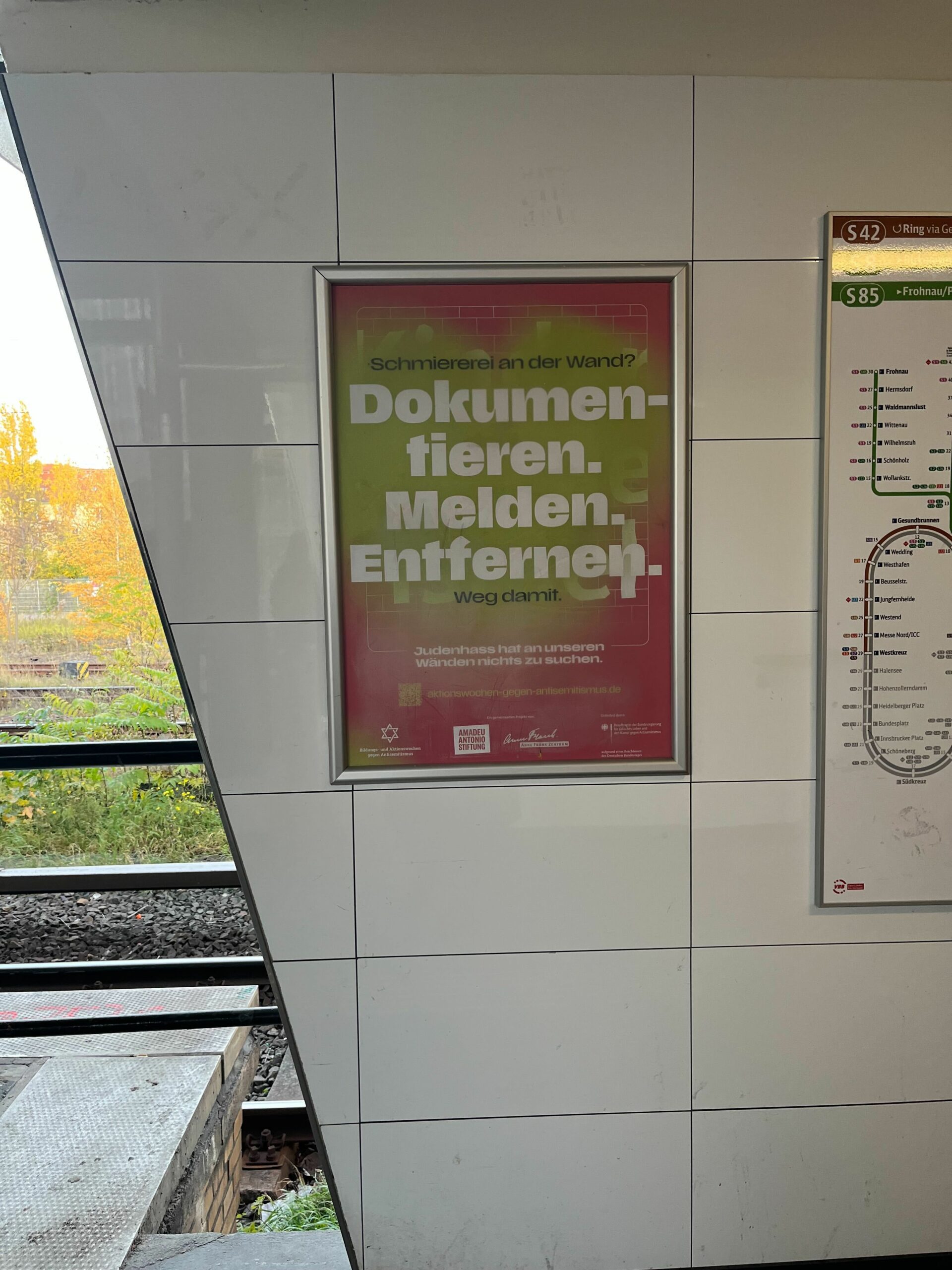
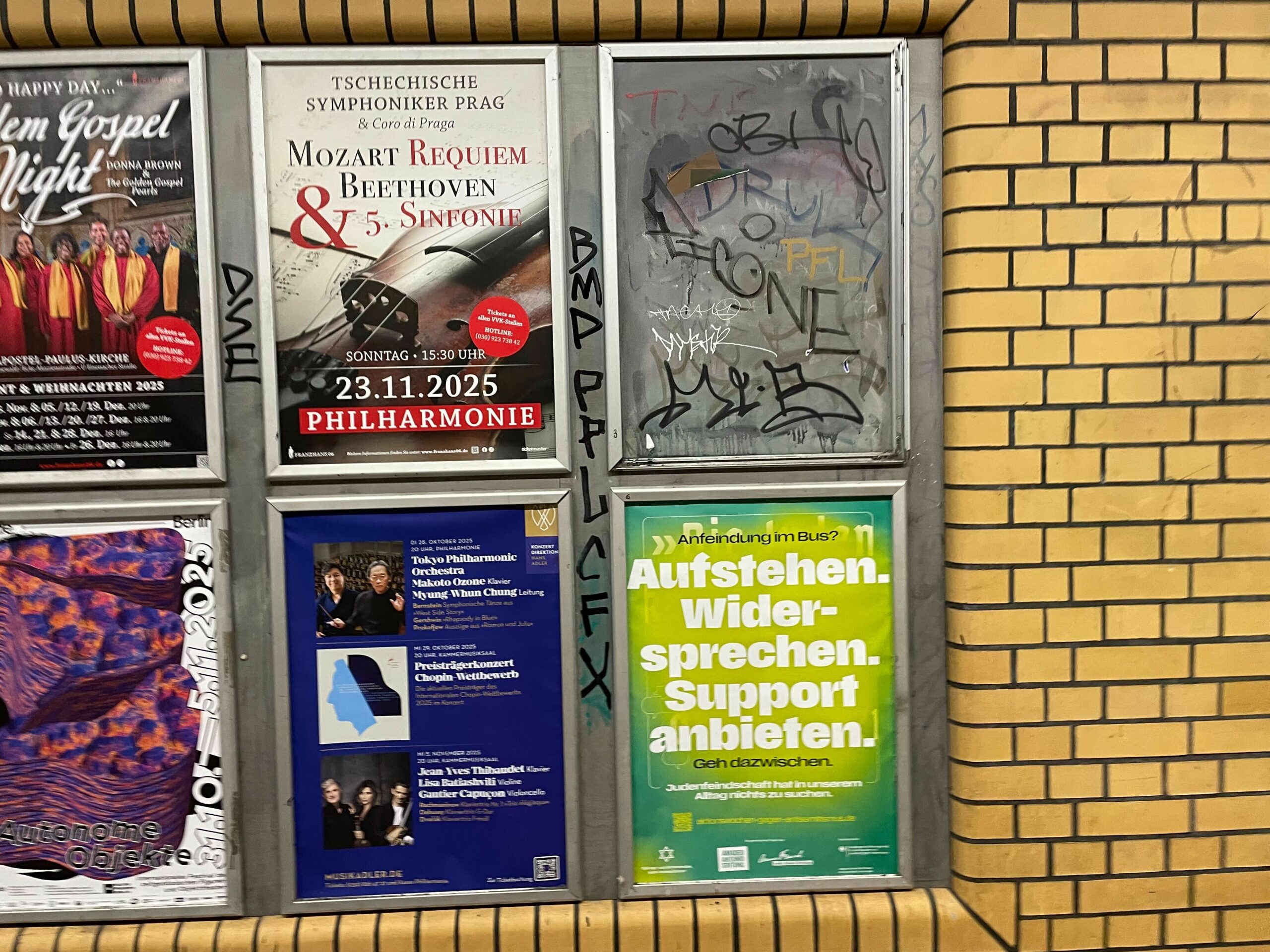
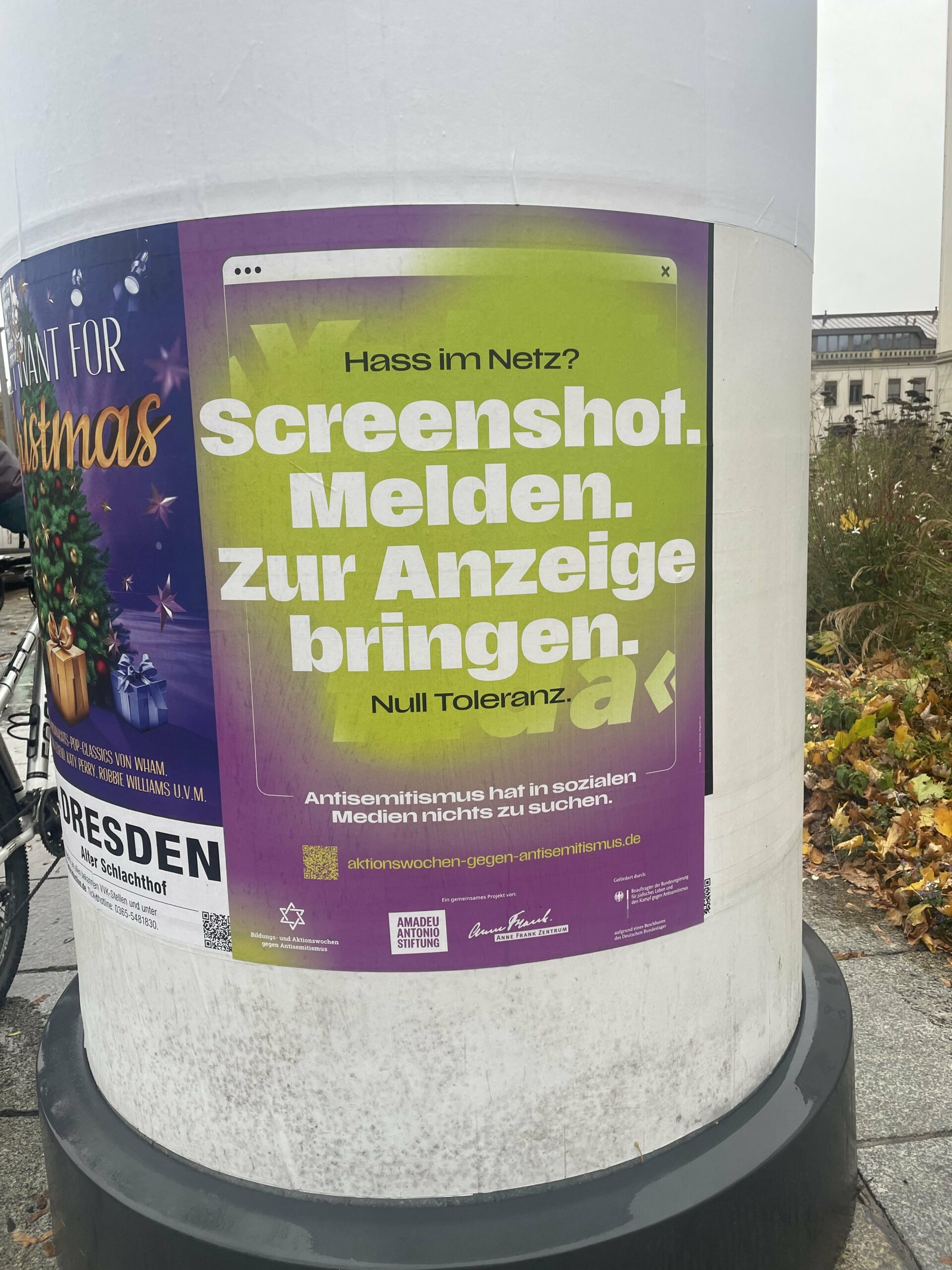
The rise in antisemitism threatens jewish life. Fighting it is a collective responsibility of society as a whole. But what exactly is antisemitism - and how do you recognize it? The correct definition is up for dispute. This leaflet introduces the debate and explains the key differences between two definitions: the “Working Definition of Antisemitism” of the International Holocaust Remembrance Alliance (IHRA) and the so-called “Jerusalem Declaration” (JDA). This is not just a matter of terminology.
It is crucial that definitions make antisemitism in all its forms recognizable in order to effectively protect Jewish people.
You can find our leaflet here.
Antisemitism has many faces, Israel-related antisemitism is one of them. While antisemitism has been around for ages, Israel-related antisemitism is a rather new phenomenon. Israel serves as a target for antisemitic projection, and this antizionist form of antisemitism puts real life humans in danger everyday.
As Israel-related antisemitism is a pressing problem, education and information are necessary. Some even claim Israel-related antisemitism is blown out of proportion or made up entirely.
Here, we present information on the issue and short, concise answers to questions surrounding the matter.
Conspiracy theories, BDS, IHRA’s working definition, structural antisemitism – debates on antisemitism often require a lot of background knowledge. And then there is Israel, which everybody seems to talk about even though the subject is anti-Jewish discrimination!? This handout tries to do justice to the complexity of antisemitism while still explaining the basics of anti-antisemitism in simple terms. We do not want to imply that multi-faceted issues and academic debates can be broken down to a few sentences. The questions and answers in this handout offer first steps and orientation and refer to further information.
Here you find our simple answers to basic questions
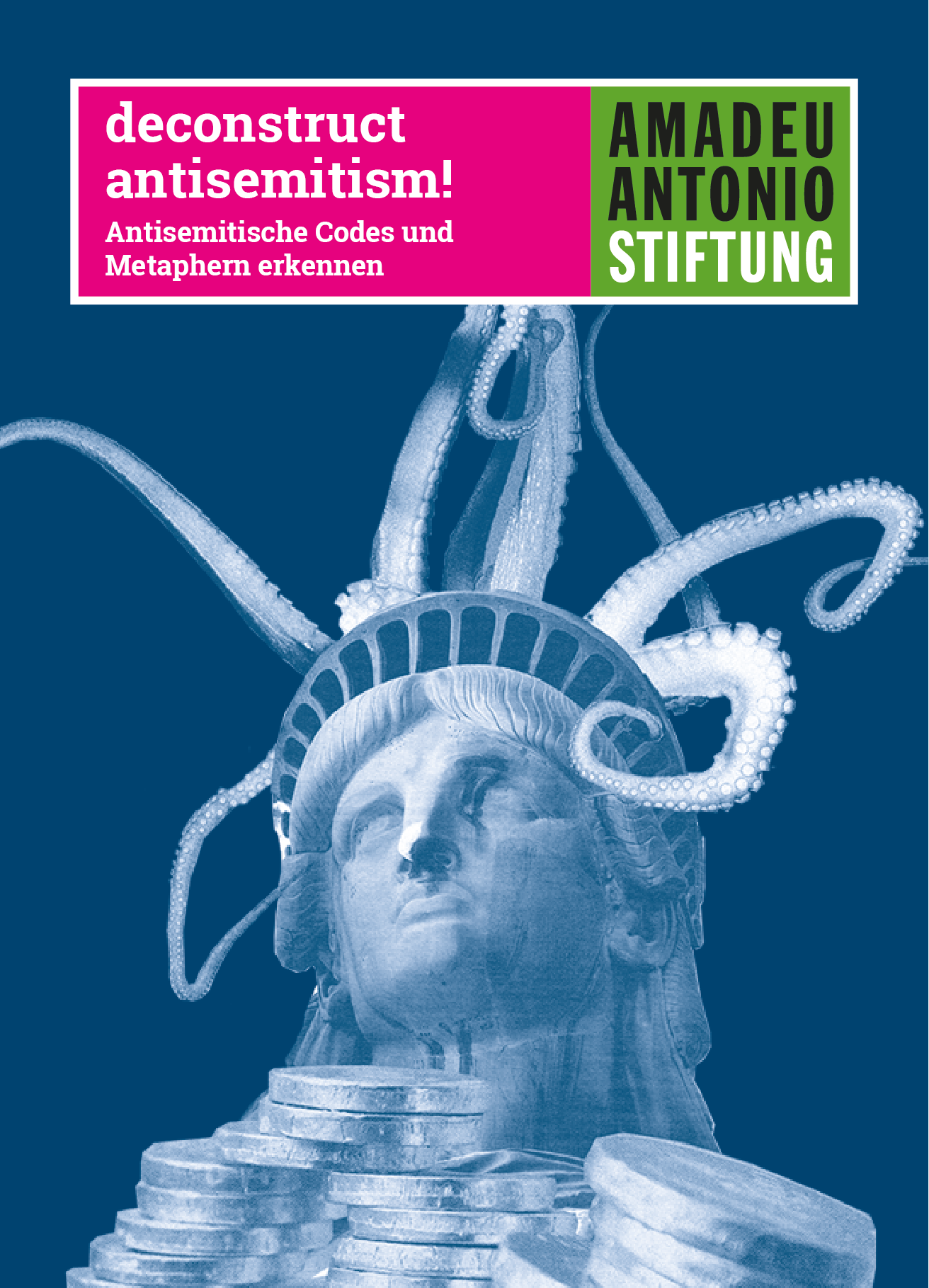
Antisemitic codes and metaphors can be used consciously as well as unconsciously. Unconscious recourse to antisemitism is made possible by the centuries of circulation that have fed some of these codes into our society’s collective memory. Conscious recourse to antisemitic codes serves multiple purposes. It can circumvent a public outcry or even criminal prosecution. After all, open hatred of Jews is taboo in German society since the Shoah, when six million Jews were murdered in National Socialist Germany, and is a criminal offence under German hate speech laws. Yet, no matter if they are used consciously or unconsciously, antisemitic codes and metaphors function as a “dog whistle”: those who are able to “hear the whistle” know how to decipher the code and will understand anti-Jewish hate is being spread.
This handout helps to detect and interpret antisemitic codes and metaphors. Most of these terms are not antisemitic per se. Their context and historical background have to be taken into account in order to recognize the antisemitism they contain. We do not claim our selection is exhaustive but have chosen codes and metaphors that we feel are being used most frequently.