“Everyone just passed by” – Interview No. 2 with Anna
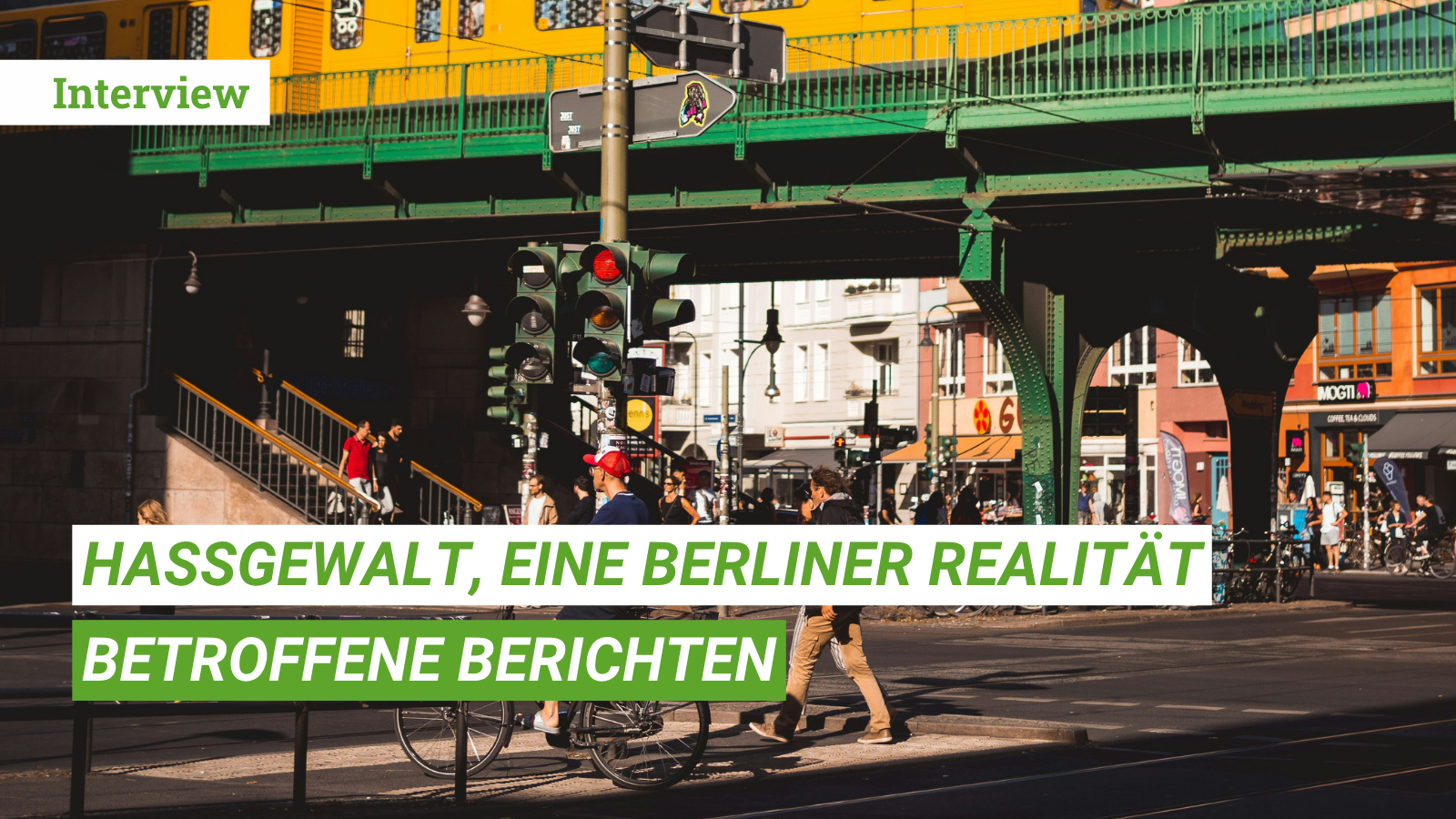
*Dieses Interview ist Teil der Reihe „Hassgewalt, eine Berliner Realität – Betroffene berichten“ und wurde auf Englisch geführt. Zum ersten Interview.
Aurélie (Soforthilfefonds): As a project, we offer financial support for people who have been affected by hate violence in Berlin. Last year you also received financial support by the fund. What happened?
Anna: Last year in April, it was a Sunday around noon, I went to my mini job and I forgot to stamp my ticket in the public transport. The women who controlled the tickets, they asked me to go out. I was cooperative, I went out. Then they asked me for my identification. I only had the copy of my passport on my phone, and my original driving license with me, since the whole pack of documents for migrants is pretty heavy. That is when they started attacking me. I had a picture on my phone, but they didn’t even tell me that I could have shown them the picture as well. I think they were leading me to this situation, they did not explain me anything. They started to block my hands and my legs and they started to beat me and torture me. I had the feeling that they wanted to break my fingers. One of the controllers later even bit me in the finger. They started kicking me in the back and legs. Of course, I asked them to stop and I was screaming for help. They also pushed me against a fire extinguisher, which really hurt, and I could not breathe. I was asking for help, so many passed by on the platform, but nobody reacted. Then an older woman passed by. At first, I thought she was going to help me. Then she started to shout that I was not obeying the rules, that I was a dirty pig and that I should go back to my country. She was encouraging the controllers. As you can imagine, I was in a state of shock and tried to free myself. Then another person came by, a man. First, I thought it was a colleague of them, but actually it was just a person passing by and he wanted to help the controllers, so he pressed my arm on my back, and kicked me and was threatening me. After that the police came – 10 of them! Which seemed exaggerated. Not one asked me what happened to me. When I asked them if they wanted to hear my version of events or see the bruises on my legs. They just told me that I could explain it in court. I was really in shock; it was also very difficult for me to speak.
Aurélie (Soforthilfefonds): You said that so many people passed by.
Anna: Yes, so as I said before around 200 people passed by and ignored everything that happened. I do not know how long the situation was, maybe 20 minutes. You lose sense of time. I was also shocked about the fact that so many people ignored everything. I think it is a dangerous signal of the society. However, I was lucky and afterwards one girl came to me. Fortunately, this girl took pictures of what happened and she gave me her number. She said that she could also be my witness. I am so thankful that she did not just pass by. It was so good of her to stop and offer her help.
Aurélie (Soforthilfefonds): Unfortunately, many people tell us that those nearby do not react or offer help afterwards. Stopping, asking and taking a picture can make a great difference for the people affected. It is actually one goal of this project to raise awareness for hate violence and the consequences for the people affected. It is important that society takes responsibility.
What did you do after all of this was over?
Anna: After that, I went to my mini job and worked maybe 10 hours. I was limping and still in shock. First, when I arrived I cried. In the end I think it was the right decision to go to my job, it was closer than home and it helped me to settle down a bit. Otherwise, I was not able to think clearly. After work, I went to the emergency room and they told me to go to the forensic medicine department for my case. They took all the pictures and statements. After that, I could not sleep for two days because my whole body was aching. The good thing was that as I could not sleep I decided to write everything down. Everything was still very fresh. After I wrote everything down, I just wanted to forget everything for a while. I could not really speak in detail about it for many months.
Aurélie (Soforthilfefonds): Where did you find support later?
Anna: Actually, when I left the forensic medicine department I saw a billboard of the Opferhilfe and that is where they recommended your project to me. At the time with my mini job I was very tight on funds and I needed a lawyer. However, it was still very difficult for me to retell the situation again and again. The counsellor really helped me to apply for the funding. Not only the money was important but also for me to see that, society helped me after I got so disappointed. Everything felt so unfair and to receive the financial support, gave me back some hope and fairness. It felt right that I didn’t have to use my own money. It felt like society supports me.
Aurélie (Soforthilfefonds): What did you use the money for?
Anna: I used the funds to pay a lawyer. I wanted to defend myself, I had a lot of psychological problems, panic attacks etc., I have PTSD now and still problems with my finger and back, but I knew that I wanted to defend myself. The lawyer who was recommended to me unfortunately was very negligent. The conversation with him was very difficult, and when he casually revealed that the controllers had filed charges against me. I couldn’t believe it, I am the victim. You know, they pressed charges for “aggravated assault and theft”. So I needed a lawyer to go to court. It was a very absurd situation seeing the judge and all of those people sitting in this room because of the charges against me. Actually, it went very quick, they did not hear all of the witnesses because the judge quickly understood what happened. All charges were dismissed. Next to being accused, I was also very stressed because my residency permit was depending on the decision and it took the court a few months to respond. I was not informed of the outcome. I had to actively ask for it, as well as for written confirmation.
Aurélie (Soforthilfefonds): What you are describing is something that happens quite often. “Victim blaming” is used by the perpetrators to shift the blame and responsibility onto the victim. So often the perpetrators press charges even though it is clear who is the victim. Are you still thinking about pressing charges against them?
Anna: Yes, I would like to. Few months after the court session my first representative reached out to me and told me that, I was not the first woman to be attacked by them. They had attacked another girl, also a migrant, before. I knew that hatred exists but to be directly affected by it was very difficult for me and a completely new situation for me. My therapist told me that if it helps me I should go on with this proceeding. I think it would help to restore my belief in people and helping me to feel safe again here. However, I really need a lawyer who specializes in these kind of cases. Someone who can help within the German system, and is more supportive and motivated. In these cases, you must know that I have supported women in my home country who have experienced domestic violence, you need a bit more than legal advice. You need a lawyer who is really engaged and who gives you the feeling that they really want to support you.
Aurélie (Soforthilfefonds): One last question: is there something you think should change regarding how hate violence is dealt with?
Anna: It would be better, if public agencies (like police, prosecutor, judges, other clerks) deal with cases not formally and automatically, but with the intention of understanding the substance of each case. For example, in my case, it could have been closed at the very beginning, if someone had read my statement, which carefully listed all the details. Instead, the clerks carried out many unnecessary actions, which caused me stress and incurred costs for the Berlin state budget. If they had been more diligent and less automatic, many of these consequences could have been avoided.
So leistet der Berliner Soforthilfefonds Hilfe bei Hassgewalt
Sie sehen gerade einen Platzhalterinhalt von YouTube. Um auf den eigentlichen Inhalt zuzugreifen, klicken Sie auf den Button unten. Bitte beachten Sie, dass dabei Daten an Drittanbieter weitergegeben werden.